How to Teach "The Masque of the Red Death": a Free Gallery Walk ACTIVITY
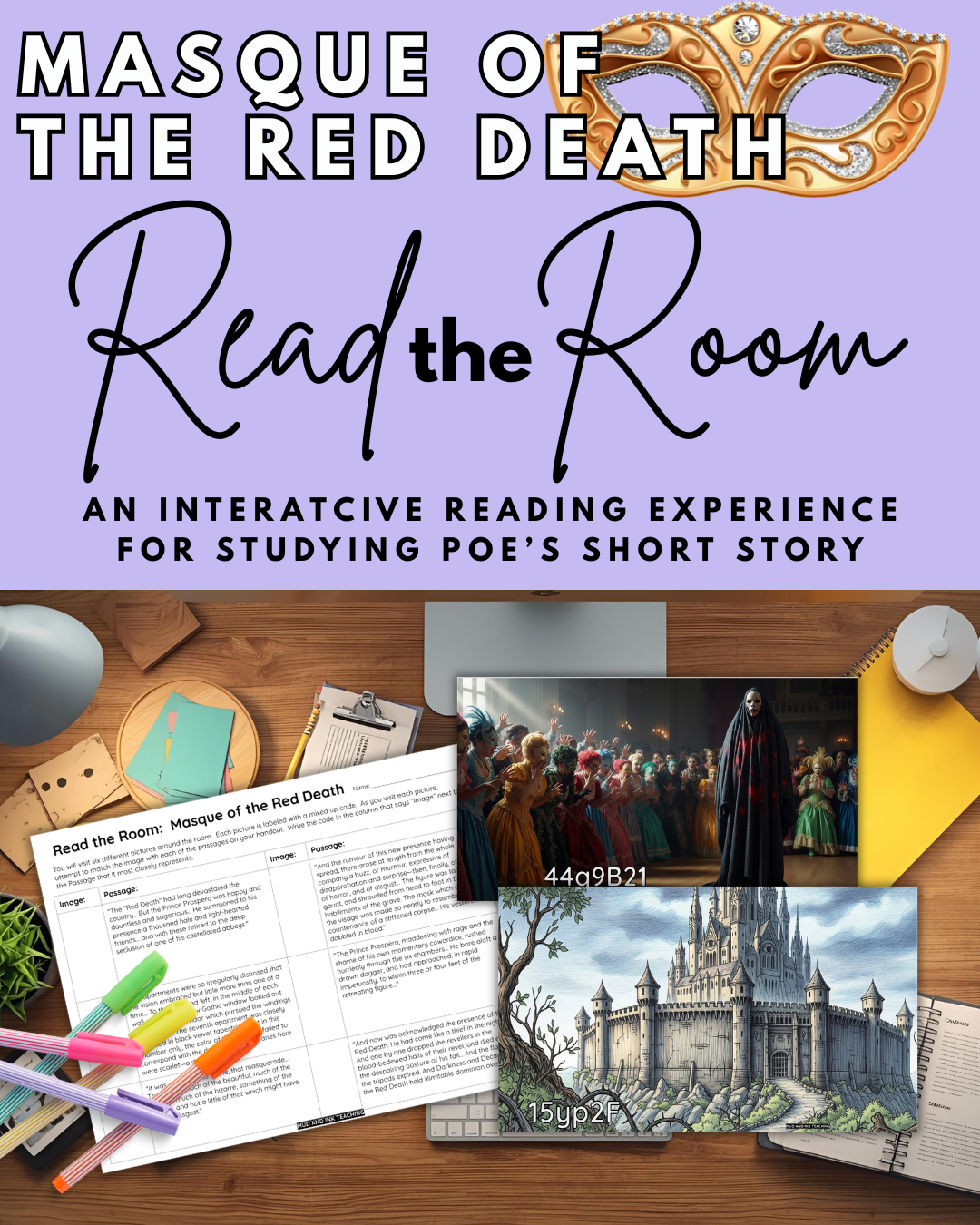
If you want one short story that delivers maximum spooky-season atmosphere and real close-reading rigor, it's hard to beat Edgar Allan Poe's "The Masque of the Red Death." It's short, it's public domain (free!), and it's absolutely stuffed with the kind of symbolism and gothic mood that makes for a great analysis lesson. The trouble is, all that dense Poe language can lose students fast if you just assign it cold.
Here's how I keep them reading closely — and a free resource that does the heavy lifting for you.
DOWNLOAD THE LESSON 👇🏻
Make them match the words to an image
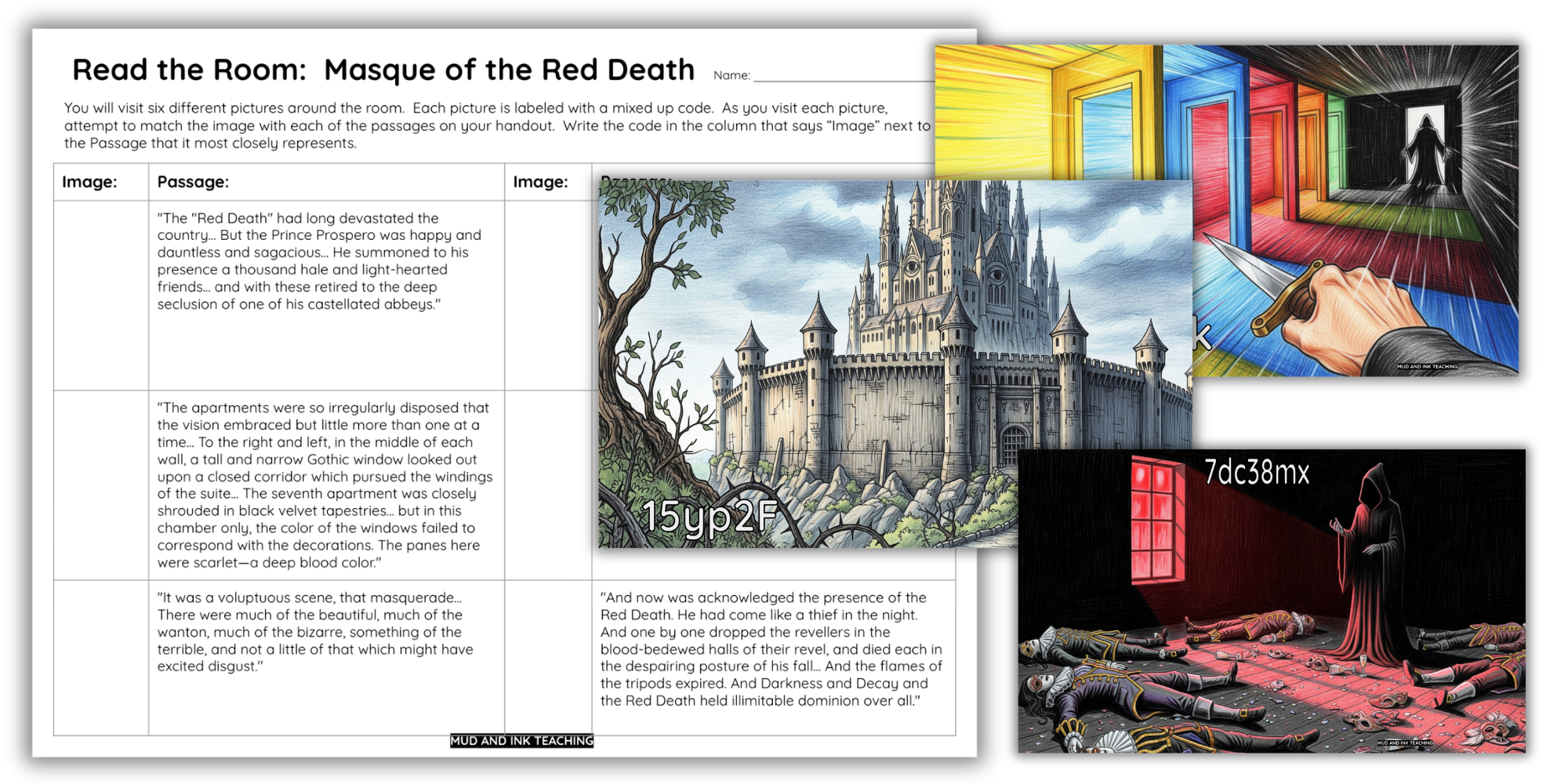
Post a set of images around the room, hand students a set of Poe's actual passages, and ask them to figure out which image goes with which passage. Suddenly, they can't fake it. To match "the seventh apartment... scarlet, a deep blood color" or the figure "dabbled in blood" to the right picture, they have to read for the specific, concrete details that pin a passage to one image and no other. Matching text to image is close reading in disguise — students are integrating visual and textual information and citing the evidence behind every choice, and they don't even realize how hard they're working.
Go one AUTHOR’S craft move at a time
The fastest way to sink a close read is "annotate for everything." So instead, pair each passage with a single focused question. At one stop, students name the tone of a passage in exactly two words — and defend the pair. At another, they dig into Poe's juxtaposition in the masquerade scene. At the last passage, they puzzle out why Poe personifies "Darkness and Decay and the Red Death" with capital letters. One passage, one author’s craft technique — that's what makes the analysis deep instead of scattered.
Ask "which image missed the mark?"
Here's the reflection question that does the heavy lifting: which image didn't capture what you pictured in your head — and what did it get wrong? That one prompt flips students from matching to evaluating. Now they have to hold Poe's language up against someone else's interpretation and argue, with textual evidence, where it fell short. That's the jump from "I understood it" to real analysis, and it makes for a genuinely great discussion.
The best part for a busy week: the whole thing flexes from a quick 20-minute matching activity to a full 60-minute deep dive, and it works no matter how your students read the story — assigned for homework, read in partners, or played as a 20-minute audio version while they follow along.
Grab the free "Read the Room" gallery walk
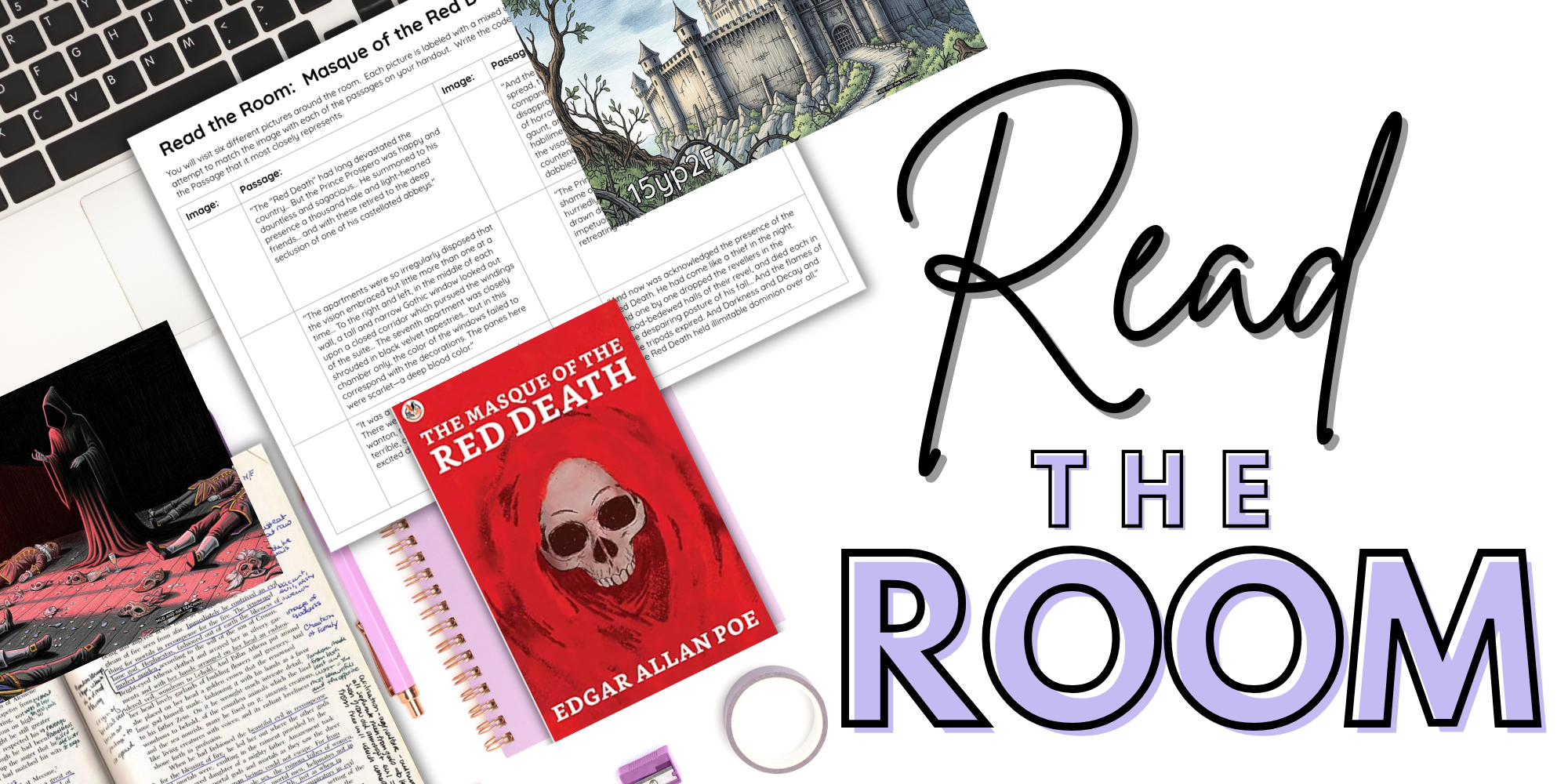
I've built this so you can teach it with zero prep. The free Read the Room: The Masque of the Red Death download includes six curated Poe passages and six coded images ready to print and post, two handout versions (a quick-match Version A and a Version B with guided analysis on tone, juxtaposition, personification, and pacing), an answer key, reflection questions, and a full lesson plan — with reading options, two timing paths, differentiation for advanced and struggling readers, and creative extensions (a sensory-details hunt, alternative endings, a "Red Death" PSA, mask design, and a scene soundtrack). It works for grades 6–12.
DOWNLOAD THE LESSON 👇🏻
Want more ways to bring rigorous, engaging reading into spooky season? Take a look at my approach to teaching short stories through genre and inquiry — Poe fits right in.

Teaching "The Masque of the Red Death" this year? Tell me your favorite way to unlock it for students — I'm always collecting ideas.