30 Poems to Teach Using The Big Six
This post is part of the Teaching Poetry Fest series that includes tons of poetry ideas from over TWENTY secondary ELA teacher-authors. Be sure to follow the hop to Allison McManus’ post about ways to teach poetry all year long to keep the inspiration going. You can also check out the resource round-up to browse the other ideas and learn about the rest of the Teaching Poetry Fest fun happening this month to help you prepare for National Poetry Month.
Teaching poetry is one of the sneakiest, most challenging types of texts that English teachers are faced with. On the surface, poetry seems fun and like it hits all the right engagement goldmines:
Poems are short - hooray! Great for our low-attention span students…
Poems are clever and creative. How fun it will be to get the chance to be original…
Poems are available for all levels of readers. It will be so easy to find the right fit for kids…
But here’s the truth:
Poems are short - hooray! Great for our low-attention span students…
…but the shorter they are, the more difficult they can be! When we’re digging into figurative language, sure the sentences are shorter, but the meaning can be so much further away for the students to find.
Poems are clever and creative. How fun it will be to get the chance to be original…
…but the thing is, being original takes EFFORT. A LOT of effort, in fact. Clever and creative, whether reading it or writing it, are not inherently easy (as most of our students would prefer)
Poems are available for all levels of readers. It will be so easy to find the right fit for kids…
…but that means we have a lot to sift through. Anthologized poems oftentimes are dusty and distant, leaving us digging through the internet and social media to find the right fit poems for our students (and who has time for that?!)
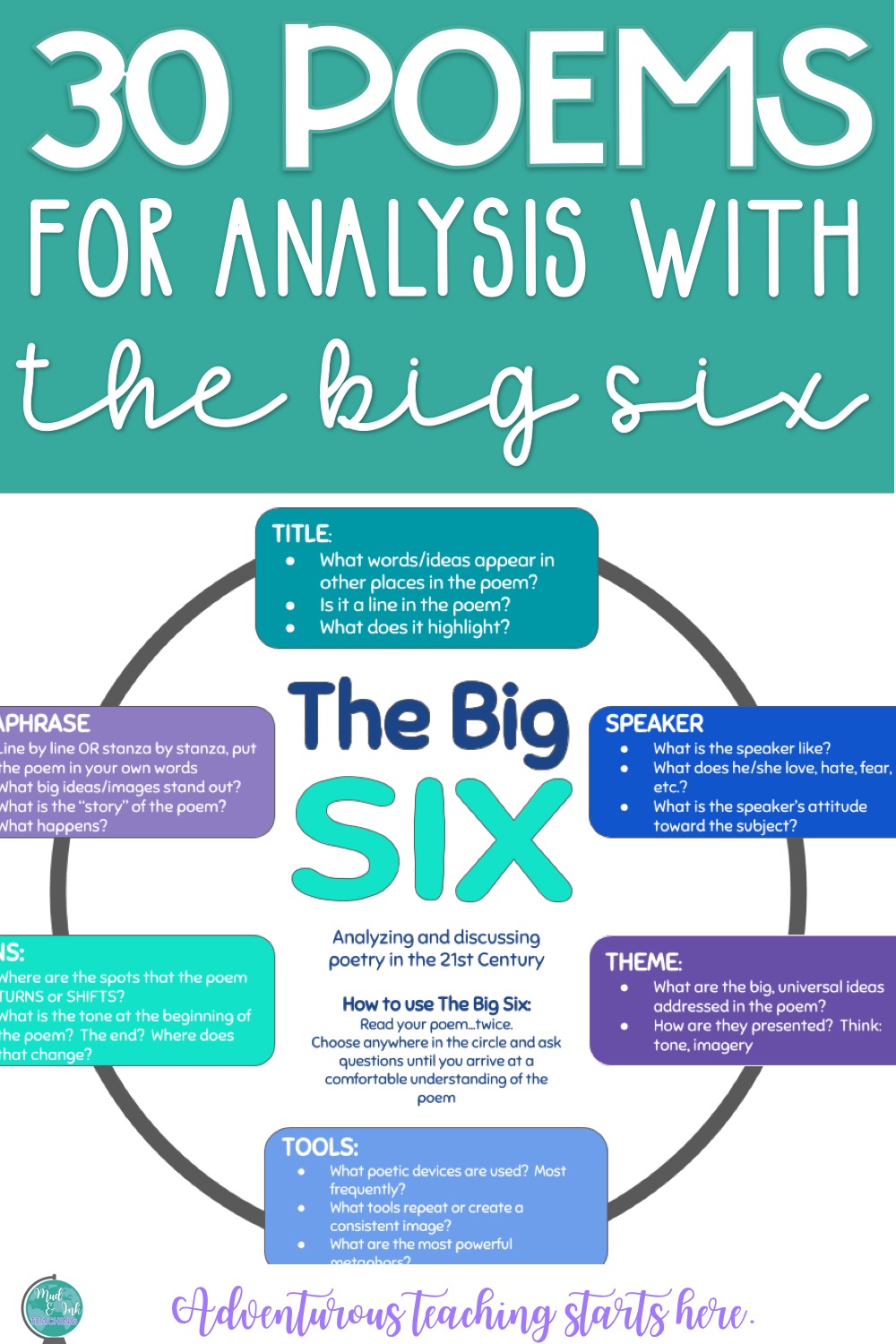
So, I sat down to tackle these issues on your behalf. I worked to find the most teachable poems I could: I wanted to find poems that were challenging and worth discussing in class, but also poems that could be tackled by students in one or two class periods. As a guide, I used The Big Six as my foundational analysis tool. If you’ve never used it, get on board!
THE BIG SIX
The Big Six is a tool that I developed in graduate school to help teachers take a consistent, rigorous, and focused approach to teaching poetry analysis. When teaching poetry, the goal for teachers is simple: GET OUT OF THE WAY. The worst damage we can do as teachers is setting the stage for teacher-led and teacher-dictated conversations about poems, what they mean, and how they should be interpreted. Yes, there are ways that students can veer of into wildly off-base territory, but for the most part, if the can be anchored by a few key concepts, most students are more than capable of discussing and thinking their way through a poem.
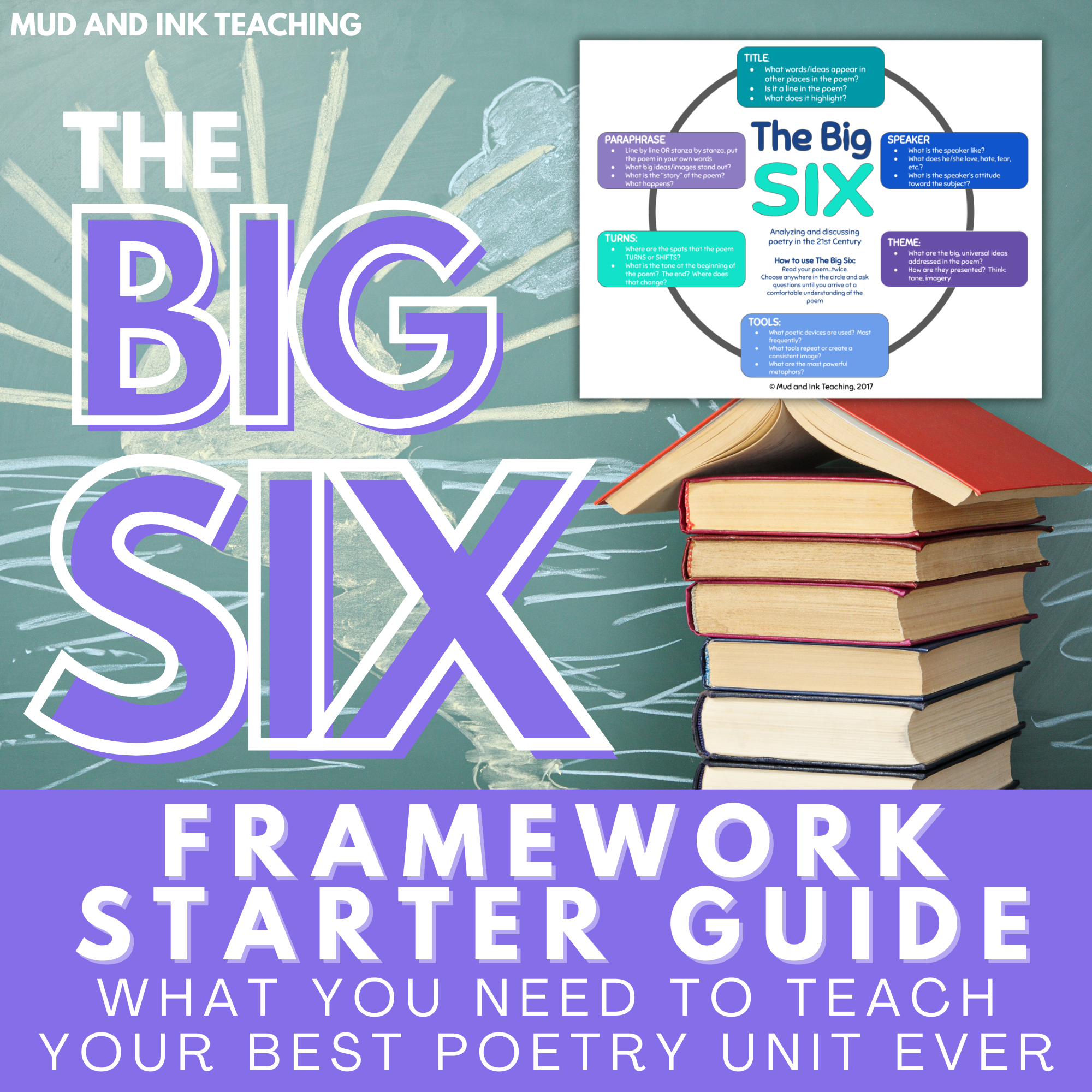
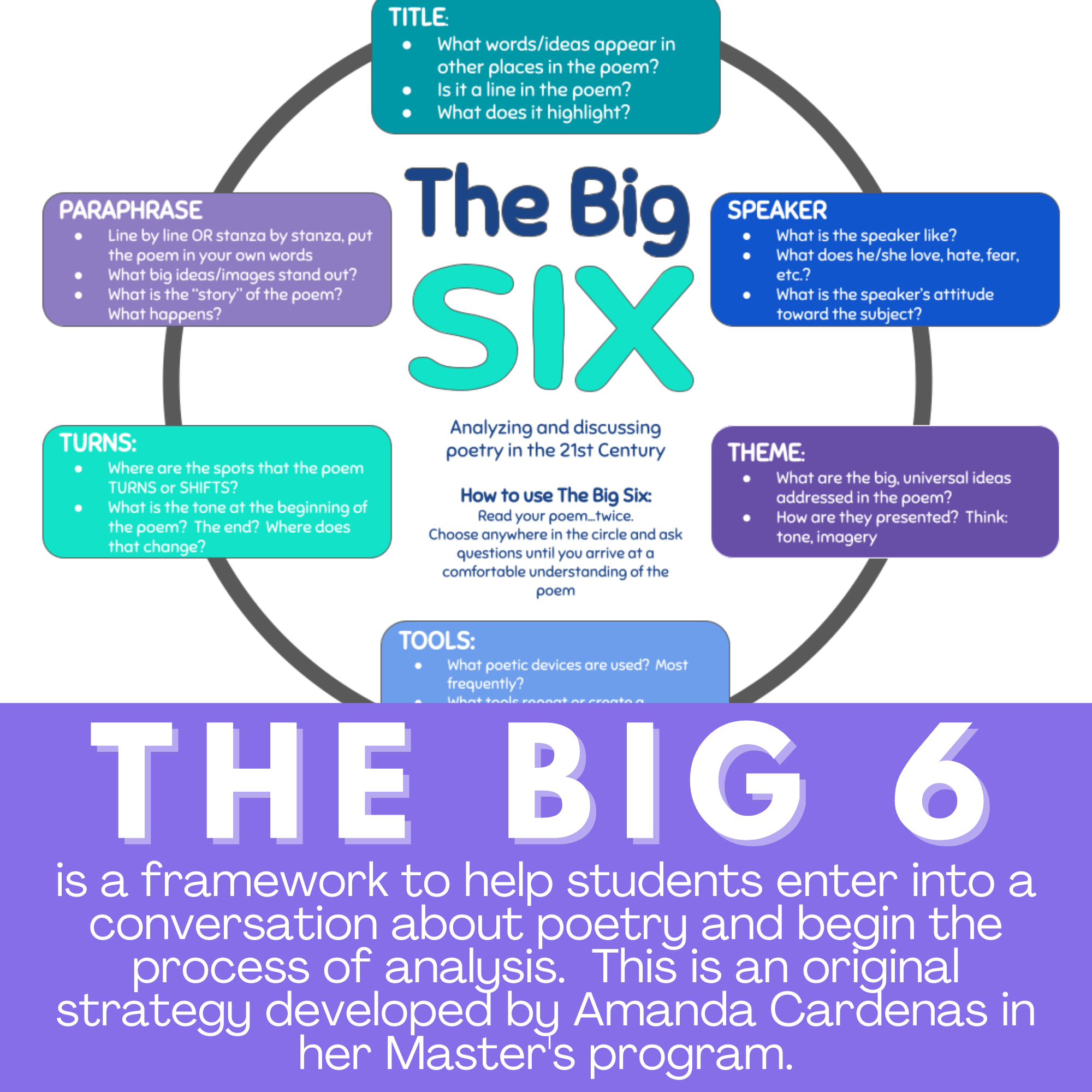
The Big Six components are meant to be entry points, or doors, into analyzing a poem: students can enter from any place they choose or feel most comfortable. Let’s stay your students just read a poem by Ada Limon. One student might be curious about the title’s relevance and impact on the rest of the poem, another student might be laser-focused on the use of color imagery, and yet another student might have picked up on some of the themes suggested in the subtext of the piece. Now, those three students have three different places to start: title, tools, and theme.
TEACHING WITH THE BIG SIX
Here are my favorite ways to use The Big Six:
STATIONS: This couldn’t be any easier - create six stations, one for each of the components. Assign or keep a single colored marker at each station (title - yellow; turns - blue, etc.). Have students move through the stations annotating for each different element in the designated color. Once students have moved through all six stations, come back as a whole class and start the conversation!
SMALL GROUPS: Put students into six different small groups. Assign each group a different element of The Big Six. Read the poem together as a whole class at least twice (be sure to define difficult language and answer preliminary questions), then, have each group analyze for their element. Come back together as a whole class and have a spokesperson from each group share out their findings.
30 POEMS TO USE FOR ANALYSIS WITH THE BIG SIX
After lots of thoughtful consideration and practice in the classroom, I’ve found these to be my thirty favorite poems to use when analyzing with the Big Six. The poems I’ve selected are poems that I would use to specifically teach ONE element of the Big Six. When you’re introducing the tool, it’s critical that students are able to practice the tool, not just glance at it and start discussing all six elements from the get-go. Spend a few days and poems working on title. Dig into the nuances and subtle (and not so subtle!) ways that title can impact a poem. Do the same for the other elements! Then, once students have really LEARNED the tool (not just been handed a copy of it), the best analysis conversations and writing are ready to take place.
TITLE:
“Design” by Robert Frost
“Oranges” by Gary Soto
“Instructions on Not Giving Up” by Ada Limon
“How to Be a Person” by Shane Koyczan
“In a Station of the Metro” by Ezra Pound
SPEAKER:
“Shooter” by Lamar Jorden
“Pig Song” by Margaret Atwood
“Skinhead” by Patricia Smith
“Totally, Like, Whatever, You Know?” by Taylor Mali
“Facing It” by Yusef Komunyakaa
THEME:
“Remember” by Joy Harjo
“Ode to the First White Girl I Loved” by Jose Olivarez
“B” (If I Should Have a Daughter)” by Sarah Kay
“Phenomenal Woman” by Maya Angelou
“New Clothes” by Julia Alvarez
TOOLS:
“Ode to a Lemon” by Pablo Neruda
“Invisible Workforce” by Bobby LeFabre
“Shoulders” by Shane Koyczan
“My Papa’s Waltz” by Theodore Roethke
“Chicago” by Carl Sandburg
TURNS:
“Stopping By Woods on a Snowy Evening” by Robert Frost
“You Fit Into Me” by Margaret Atwood
“We Real Cool” by Gwendolyn Brooks
“‘Hope’ is the thing with feathers - (314)” by Emily Dickinson
“Awkward Scars” by Robbie Q. Telfer
PARAPHRASE:
Queen Mab speech from Romeo and Juliet
Prologue from Romeo and Juliet
“Her Kind” by Anne Sexton
“One Art” by Elizabeth Bishop
“Let America Be America Again” by Langston Hughes
I hope you found these poems to be useful as you work on your essential question units or your poetry unit! Let me know which ones you taught, how The Big Six is helping you teaching poetry, and what you’re up to in your classroom these days!
You’re currently reading one stop in our Teaching Poetry Fest blog hop! When you’re finished, hop on over to Allison McManus’ post about teaching poetry all year long to keep the loop going, or visit the round-up post to take a look at all of the Teaching Poetry Fest ideas in one place.





SHOP THE MUD AND INK STORE